7. Solar panels
Which Solution is the most powerful for you? See the calculator page.
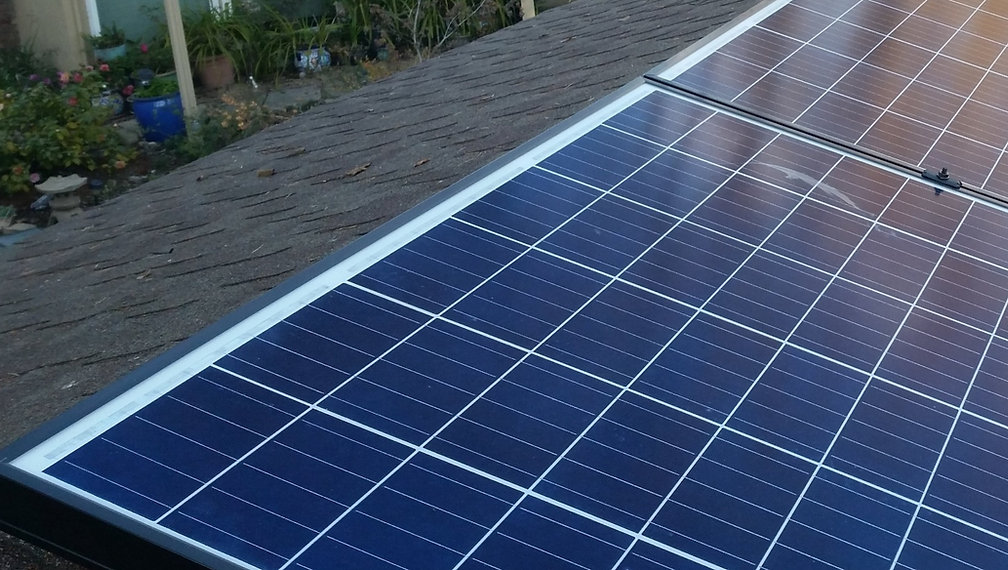
If you own your house, and the south side of your (not-too-old) roof gets plenty of sun, there used to be no reason to waste all that “free” energy landing on the top of your home every day.
See: solar-panels or solar-power.
Caution: The key ingredient in crystalline solar modules (see photo) is polysilicon, which is often produced using forced labor in Chinese Communist concentration camps. This tragic situation has worsened within the past few years.
Just before Christmas 2021, the Uyghur Forced Labor Prevention Act became federal law, which is intended to prevent items made in these camps from being sold in the United States.
I cannot, in good conscience, recommend buying residential solar panels until there are more humane manufacturing options. If legislative efforts do the trick, competitive polysilicon manufacturers may re-open shuttered plants, allowing the public to obtain ethically-made high-efficiency solar products once again.
If you cannot wait for that brighter day, here’s some information about rooftop solar:
-
To get sunlight access information about your location go to: Project Sunroof.
-
Getting a loan to pay for installation is usually better than leasing: leasing-vs-buying
-
A credit union may have a better loan than a bank or contractor. Search: credit unions near me
-
When shopping, compare the warranties of the panels and inverters. Micro inverters are best if any of the panels are occasionally in daytime shade. Monocrystalline panels are preferable.
-
SolarReviews suggests LG and Panasonic as two top choices for solar panels. Ethical Consumer’s scorecard gives LG a significantly better score than Panasonic. LG panels are assembled in the democratic countries of the USA or South Korea.
-
You’ll get back about 25% of the cost of the installation with next year’s taxes. For a good explanation of the Investment Tax Credit (ITC): investment-tax-credit.
-
Ask contractors about other incentives, as well as your local utility - although note that some contractors may exaggerate possible financial benefits.
-
The biggest part of the solar rooftop job is the electrical hook-up. See if you can find a local electrician (or a county inspector) for advice/options/ideas. Also, inspector permits may take longer than expected.
-
To find professional installers within California; across the USA: energysage.
-
Without rooftop solar, there’s still a chance you can get renewable electricity through the grid - by signing up for a CCA program!

It often makes sense to get a battery storage system installed at the same time as the rooftop solar. However, this will increase your up-front costs, which is why we postponed getting batteries until later.
When there’s an electrical blackout, you will not be able to use the electricity from your roof, UNLESS
- you have an SPS system and/or
- you have proper battery storage or
- you’re 100% unconnected to your utility (“off-grid”)
See the batteries page for more information on this back-up issue and other electrical storage questions!
Here’s one more item about the dark side of solar: e-waste. “The financial incentive to invest in recycling has never been very strong in solar.” The U.S.A. “lags behind Europe and other regions in its PV recycling programs”. There is research being done (and regulations being discussed) about how solar panel recycling could become cost-effective, but, right now, older modules end up in a dump.