1. Get rid of the car
To measure your personal pollution: go to calculators.
Biking, public transit, and walking are good for your health and good for our air.
More people bicycle today than ever before: bicycle safety tips.
Walking is wonderful; if you’re able to walk or bicycle, go for it!
Millions of people use public transit. Most transit agencies have their own apps with routes and schedules, plus a way to check when the next bus or tram is arriving. Some places allow bikes on the streetcar or bus.

For more information on trains and buses, please see #2.

If you really need a car, lease or buy an electric one.
Used electric cars are cheaper, but there are no financial rebates with a used purchase. For more on rebates, see further below. New cars get better “range” (the distance they go on a full charge), and get government financial incentives. In general, more range costs more money.
The Nissan Leafplus (from $27K to $37K) gets up to 225 miles range.
Hyundai makes the Kona ($35k - $44k / 255 mi), and the Ionic 5 ($41 - $56k / 220 - 300 mi).
Kia manufactures the Niro ($41k - $46k /235), and the EV6, but these may be hard to find.
Ford has the Mustang Mach-e ($45k - $66k / 210 - 300 miles), at dealers now, and says the F-150 ($42k - $93k / 230 - 300) pick-up truck will arrive later in 2022.
The most popular Electric Vehicles (EV’s ) have been Tesla’s Models’ 3 and Y ($50,000 +/- 300) partly because of the longer range, partly because of their exclusive super-charger network, and partly because the company specializes in EV’s (they make no combustion-engine cars).
The Ionic 5 offers VTL (Vehicle To Load) capability, which means you can plug electrical items (i.e., a laptop) into a car socket to use the electricity from the car battery. Ford claims the amount of VTL electricity in it’s pick-up truck will be much more than what’s available in the Ionic 5 (enough to power a fridge plus…). Remember though that you’ll still need some of that electricity to drive the vehicle.
While “one in three U.S. housing units do not have a garage”, if you do have a garage, electric cars are easy to charge. Plug the EV into your ordinary wall socket overnight. Your regular (110/120v) outlet will provide ‘fuel’ for about 50 miles in 12 hours.
If you have a lengthy commute, get a 220/240v unit for faster home charging.
For longer trips, super-chargers are in a variety of locations such as in parking lots of Walmarts or Whole-Foods. Use the PlugShare app to find out where! These fast chargers can take between 20 to 40 minutes and cost about $15. Not all EV’s can connect with every super-charger, but the PlugShare map spells out which type is where.
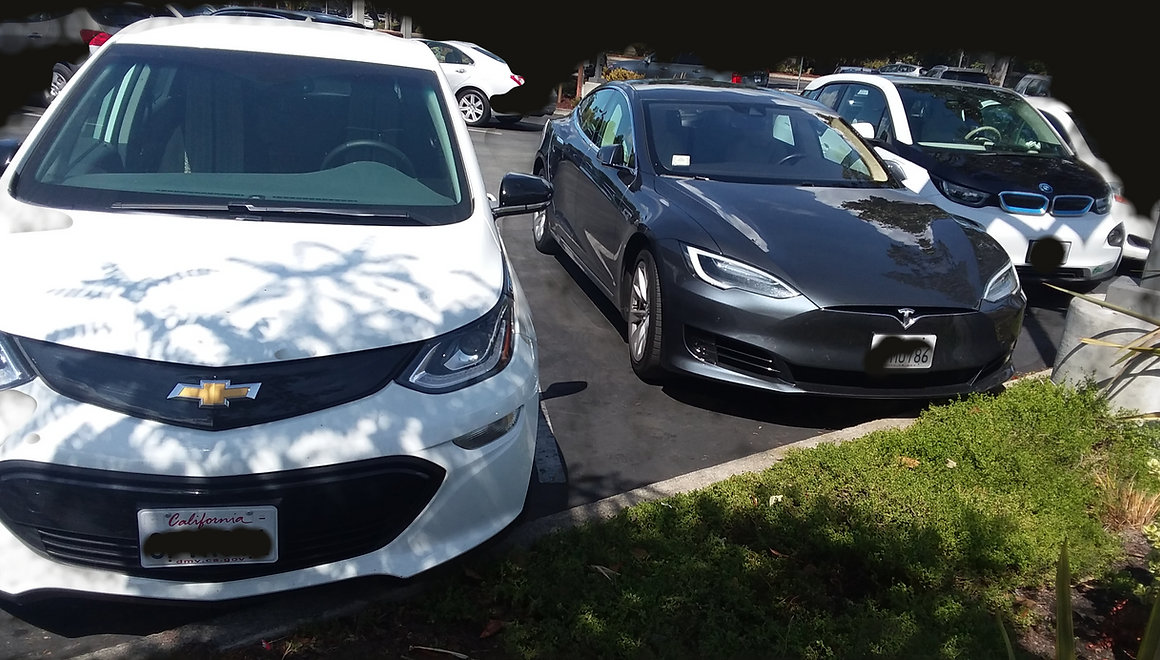
See 10 reasons, and greencarreports
Bad News: Electric vehicles are not faultless … mainly because of the batteries, due to the same sourcing problems as the batteries in your phone or laptop:
The spiralling environmental cost of our lithium battery addiction - WIRED
So, again, is owning a car necessary? Even tires are complicated.
Many people feel they have little choice. If so, electric cars are at least 2x better than oil/gasoline vehicles: are-electric-vehicles-really-better-for-the-climate-yes-heres-why.
For lease deals look at: Electrek. For deals on EV buying: best-electric-vehicle-prices. If you’re new to EVs, a lease may be a better choice for your first electric car.
“For all EVs…the lifetime ownership costs were many thousands of dollars lower than” conventional cars - because of no gasoline, no oil, and little maintenance or repair work.
If you are part of a credit union, ask if they have an auto broker. A broker can help find local bargains and figure out lease vs purchase options, but don’t let them steer you towards an oil’n’gasoline car! If you’re not in a credit union, they’re easy to join. Search: credit unions near me
Rebates and discounts may add up to $10,000. Auto dealers, Costco, your utility, your state, as well as the federal government have differing rebate offers. The largest incentive is the U.S. tax credit of $7,500 (if you owe that much), although it no longer applies to Teslas or the Chevy Bolt.

If you sell your old car yourself, you’ll get more money than a dealer will give you for a trade-in. For tips: how-to-sell-your-car
For more on the bio-diesel controversy see: biofuels-vs-evs, or EV-or-a-Biofuel
Click this link for more on cars and car companies.